


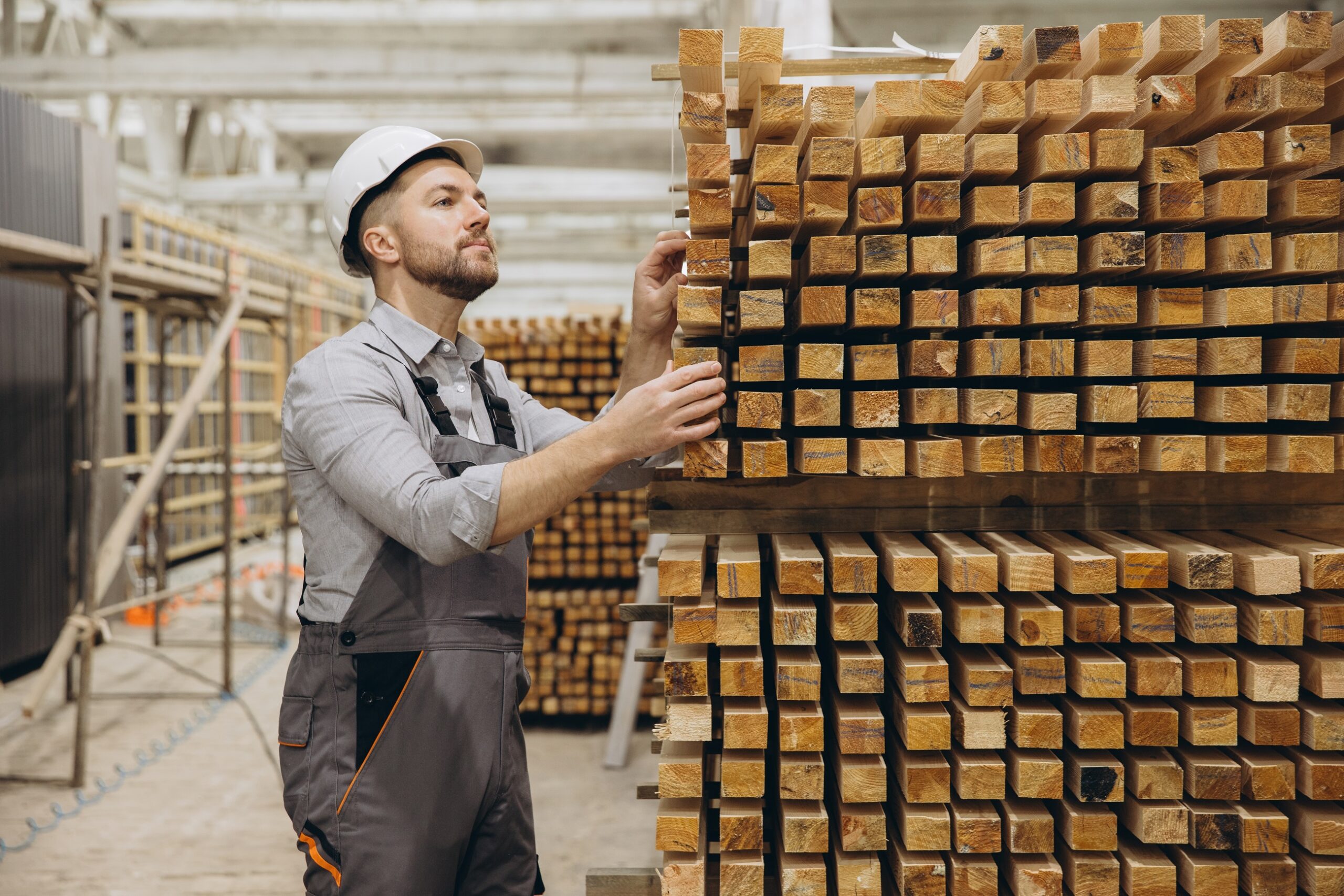
Polish producers increasingly hear from large customers: “lower the price or you’re off the list”. In a world of rising costs for raw materials, energy, labor, certification, and environmental implementations, such expectations sound like a bad joke. The problem is that this is not an anecdote – it’s the daily reality of many facilities.
Added to this is the fashion for “transparency”, but only on one side. The producer’s price must be transparent, comparable, and of course – always lower. Meanwhile, costs on the retail or chain side – silence. Free deliveries and returns, promotional campaigns financed by the supplier, penalties for logistical delays or lack of goods, extended payments – all of this is passed directly to the manufacturer.
What does Polish production really face today?
- Raw materials – prices of wood, metal, or components change like in a kaleidoscope. Additionally, certification requirements are growing (FSC, REACH, CE, environmental standards), which are costly to maintain.
- Production cost – energy, wages, investments in occupational safety and automation are growing faster than the ability to raise sales prices.
- Pressure on unit price – discussion about value and total cost in the supply chain practically disappears. What matters is “how much per piece” – without analyzing quality, losses, or service.
- Extended payment terms – in practice, this means financing chain operations at the expense of producer liquidity.
- Pseudo-transparency – comparing only purchase price, without considering complaints, delivery time, quality stability, or logistical costs.
If nothing changes, then in 10 years…
Many facilities simply will not exist. Some will move production to where costs and regulations are lighter. Some will fail. The consequences? Loss of jobs, emptying halls, and – most dangerously – the disappearance of manufacturing competencies that take decades to build.
Let’s not fool ourselves – imports will “solve the problem” only until the first crisis in the supply chain. Then the lack of local production will affect everyone – including end customers.
Does a good producer still have a chance? Yes, if we change the rules of the game
1. Discussion about value, not just price.
Instead of negotiations based on “please reduce by 5%”, we need to discuss the total cost of purchase: losses in transport, number of complaints, delivery time, supply flexibility, after-sales service. These elements determine profitability for both sides.
2. Price indexation and revision clauses.
With large deviations in raw material or energy prices, the producer must have the ability to adjust rates. Otherwise, sooner or later they will be producing “at cost” – or below.
3. Design with costs and online sales in mind.
Compact packaging, quick assembly, lower percentage of transport damage – these are real savings on the seller’s side that can be included in commercial negotiations.
4. Process automation and standardization.
Every hour of work and every waste costs money. Component standardization, better production planning, order digitization – these are not “innovations” today, but necessities.
5. Sales channel diversification.
Alongside large retail chains – own B2B/B2C online store, short series for the local market, cooperation with smaller but stable customers.
6. Partnership instead of pure transaction.
Joint sales planning, investments in new forms and solutions, shorter payment terms in exchange for availability guarantees.
7. Conscious quality narrative.
The producer should openly discuss technical parameters, tests, standards met – this allows explaining the price difference.
Data worth ATTENTION
1. Forest-wood industry as an economic pillar
The wood sector accounts for 6.8–8.5% of Polish GDP — meaning it generates from 1/15 to 1/12 of the country’s entire economic activity. In 2022, production value in this sector was 261 billion PLN, but already in 2023 it fell to 230 billion PLN.
2. Decline in wood profitability
In Q3 2023, sales profitability of wood product manufacturers fell to just 3%, which is one of the lowest levels in history. Manufacturing pulp or wood-based panels was even less profitable — from 1.7% to 2.6%. MODERN INDUSTRY
3. Debt and bankruptcies
The wood industry is going through the deepest crisis in decades. Production and exports are shrinking, profitability is declining, and viability is in question. Despite the government’s “Package for the wood industry”, real effects are still uncertain, and companies are turning to restructuring and factoring.
4. Export as a growth engine – though with acceleration
Export of wood products accounts for almost 40% of industry revenue. In 2021, Poland ranked 3rd in the EU in positive wood trade balance (after Sweden and Austria). The industry has accelerated foreign sales for years, which was a powerful development stimulus.
5. Garden online shopping boom in Poland
The garden products market grew from 1.33 billion PLN in 2019 to 1.6 billion PLN in 2023 — that’s over 20% growth in four years. The average online garden basket is currently 273 PLN; only 4% of buyers spent 251–500 PLN in 2021, and already 17% in 2022. biznes.meble.pl
6. Environmental improvement – positive trend in emissions
The wood industry achieved the deepest percentage reduction in carbon dioxide (CO₂) emissions in the industrial sector — it achieved the best reduction result in Poland.
Two questions that must be asked
📌 To buyers and chains – is it really profitable to “squeeze” the supplier if soon there will be no one to produce?
📌 To producers – do we have the courage to conduct negotiations based on value, processes, and quality, not just on “how much we can cut from the price”?
If “transparency” is to apply only to the factory, then in a few years only… empty halls will be transparent.
It’s time to return to discussing full cost and full value in the supply chain.
Because if not, we all lose – producers, sellers, and customers.
See all our blog posts BLOG
Visit our online store SiestaGarden